

Nemish Shah: The Man Who Trusted Compounding
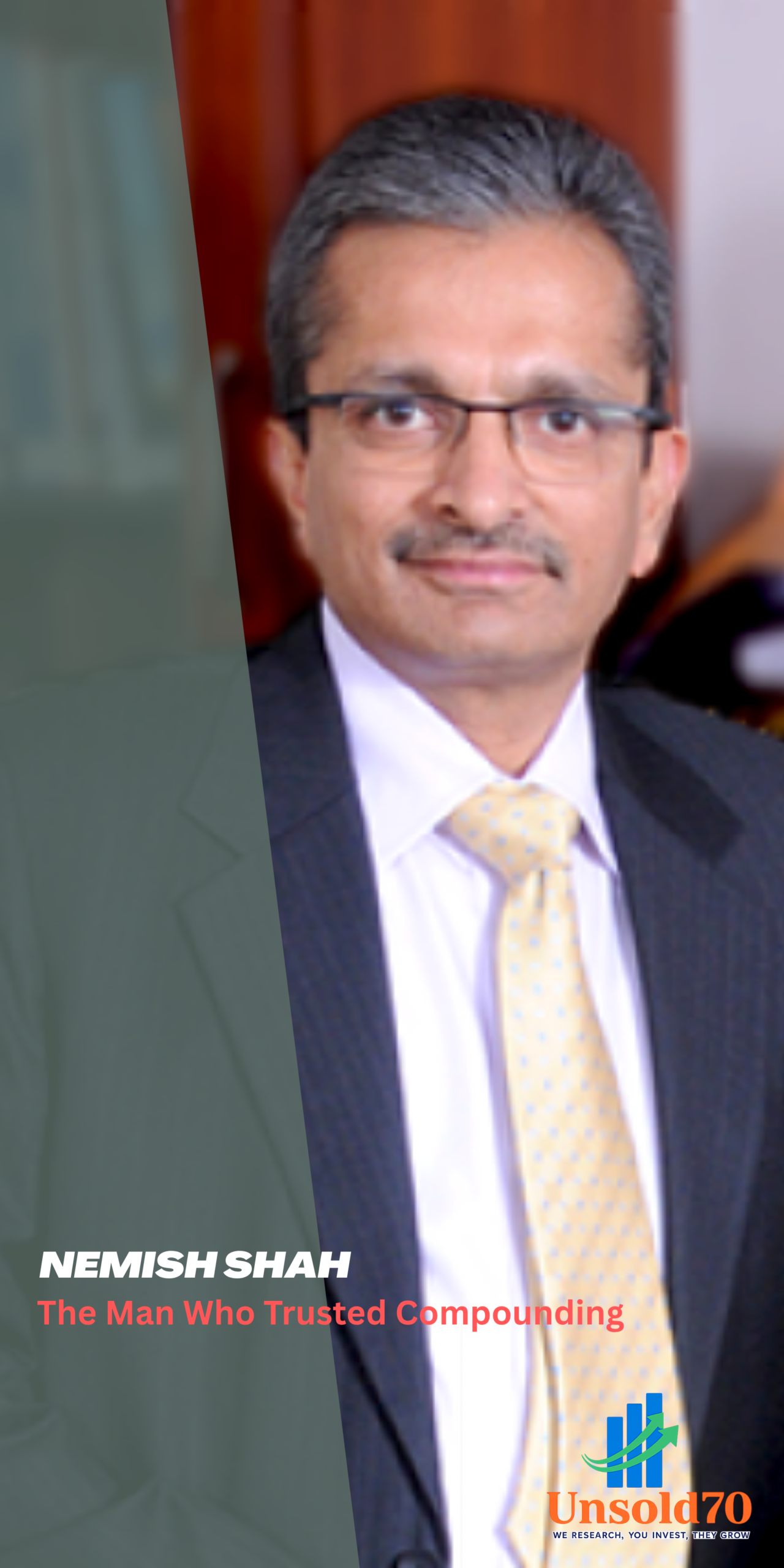
Nemish Shah’s story is inseparable from the evolution of India’s capital markets. Back when screens didn’t flash stock alerts every second, Shah learned about companies by watching closely, staying focused, yet always asking more. Raised where money choices followed caution instead of hype, he saw value in holding back, not rushing in. Because of that, cash never felt endless – more like something earned slowly, spent slower. These ordinary moments quietly built how he’d see markets years ahead.
The young Shah was less interested in predicting stock prices than in understanding why businesses succeeded or failed. Most people chasing stocks fixate on price swings. Yet Shah looked deeper – focusing on how companies produce cash, who runs them, and whether they operate well. That mindset set him apart slowly, while others jumped at rumours or daily noise. Quiet analysis became his edge without seeking attention.
How He Entered the Stock Market
Shah entered the stock market during a period when investing demanded extraordinary effort. Information was fragmented, research was difficult to obtain, and market participants often relied on rumours travelling through informal networks. In such an environment, separating signal from noise was not merely a skill; it was a competitive advantage.
His eventual role in co-founding ENAM marked a turning point. Shah saw the market not as a gamble, but more like a space for careful study. Where others looked for quick wins, he searched for slow growth hiding inside solid businesses. Instead of betting on jumps in price, he focused on where lasting worth took root across years. Quick spikes didn’t interest him nearly as much as steady buildup did.
- Old-school limitations: Delayed information, limited research access, heavy dependence on broker networks, and widespread speculation.
- Modern value-investing capability: Structured financial analysis, management assessment, capital allocation studies, and long-term business evaluation.
- This shift toward disciplined research provided what many investors desperately lacked: cognitive relief from market chaos.
Biggest Investment
What stood out about Shah wasn’t any flashy deal. Instead, it was spotting solid companies early – well ahead of crowd approval. Most of his major bets followed a similar thread. Firms run by sharp leaders, carrying little debt. Places where money was used wisely. Yet, others overlooked them.
Patience turned these moves into something worth noting. While plenty of investors chase quick wins from climbing share values, Shah usually played a different game – one stretched over years. The gap between what companies is truly worth and how markets price them in the near term? That space is where he stepped in. Waiting wasn’t passive; it was part of the plan all along.
The significance of these investments extended beyond financial returns. They demonstrated that wealth is often created not through constant action but through selective conviction supported by rigorous research.
Failures and Lessons
Every now and then, big losses shake even the most careful investors. Still, growth often hides behind wrong turns – Shah knew this well. When markets shifted, old ideas cracked under pressure. Flaws in thinking surfaced, just like blind spots about how people really act when money’s on the line. A few bets simply missed their mark. Elsewhere, unseen forces bent entire economies, drowning out what companies were truly made of.
Losses never felt like failures to Shah – they were payments, each one buying a lesson in how money really moves. One misstep taught him about shaky leadership. Another clarified what true value looked like under pressure. Over time, a quiet truth took root: staying out of deep holes beat chasing big wins every single time. Frustration wasn’t rare. Often, chasing guesses got praised – while waiting quietly drew penalties. Still, during those exact moments, he felt surer: steady choices needed to stand apart from what others were feeling.
Investment Philosophy
Time works best when you own solid companies without paying too much. What matters most? Maybe it is leadership that makes smart choices with money. Shah pointed this out again and again. Strong managers build lasting worth more surely than almost anything else. Picking well, then waiting – that shapes results. His framework can be summarised through several enduring principles:
- Focus on business quality before stock price movements.
- Prioritise management integrity and execution capability.
- Seek strong returns on capital and efficient balance sheets.
- Ignore short-term market noise whenever fundamentals remain intact.
- Allow compounding to operate over extended periods.
This philosophy emerged as a practical response to market hysteria. When markets chase predictions, attention drifts toward speed and guesses. Yet Shah turned his focus to how companies are built, building choices on proof instead of hype.
Growth Journey
Slow gains marked how Shah built his money. Not luck, but time turned small moves into momentum. Each choice fed the next, like interest folding into more interest. He put funds where they could grow on their own. Results came from repetition, not rare wins. Steady bets on working enterprises shaped what he achieved.
The trajectory offers an important lesson about wealth creation. Many investors imagine net worth growth as a sequence of dramatic breakthroughs, yet Shah’s experience suggests the opposite. Little steps, when put back into play year after year, tend to build results that seem surprising once you look back. Years pass before the weight of small choices shows.
Stability of mind often shapes financial growth more than strategy alone. When excitement pulls others toward quick wins, staying calm opens space for longer paths. Gains build quietly where impulse is kept in check. Lasting results come not from following noise but from standing apart from it.
Key Advice for Beginners
What stands out most in Shah’s journey isn’t luck or timing – it’s a habit of focusing on how companies work instead of trying to guess where prices will go. New investors tend to look for quick fixes, missing the fact that lasting results grow from consistent analysis. His guidance can be mapped into several practical principles:
- Study annual reports before studying stock charts.
- Evaluate management quality as carefully as financial metrics.
- Avoid herd behavior and speculative manias.
- Think in years and decades rather than days and weeks.
- Preserve capital first; pursue returns second.
Now think about how hard it is to focus when everything demands attention. Backed by years of observation, his method stands out precisely because it ignores noise instead of chasing it. With so much detail available at once, clarity becomes rare – almost accidental. What matters most shows up only after the clutter fade away.
Famous Quotes
Although Shah is known more for thoughtful investing than public theatrics, several ideas associated with his philosophy continue to resonate among serious investors. They reflect his preference for business fundamentals over market excitement and patience over prediction.
“Good management can create value even in difficult environments.”
“The stock market is a mechanism for transferring wealth from the impatient to the patient.”
“Business quality ultimately matters more than market sentiment.”
“Compounding rewards discipline long after excitement has faded.”
“Investing is not about activity; it is about intelligent ownership.”
Together, these statements capture the essence of Shah’s career. They reveal an investor who viewed markets not as arenas for speculation but as mechanisms for participating in the long-term growth of exceptional businesses.

Related Posts
Anil Kumar Goel Biography: Portfolio, Career & Investment Philosophy
Anil Kumar Goel: India's "Sugar Baron" and the Discipline of Deep-Value…
Raamdeo Agarwal: From Rural Roots to India’s Value Investing Icon
Discover the inspiring journey of Raamdeo Agarwal, one of India's most…
Nikhil Kamath: The Contrarian Who Rewired India’s Investment Landscape
Discover the inspiring journey of Nikhil Kamath, the co-founder of Zerodha,…
Leave a Reply