

Raamdeo Agarwal: From Rural Roots to India’s Value Investing Icon
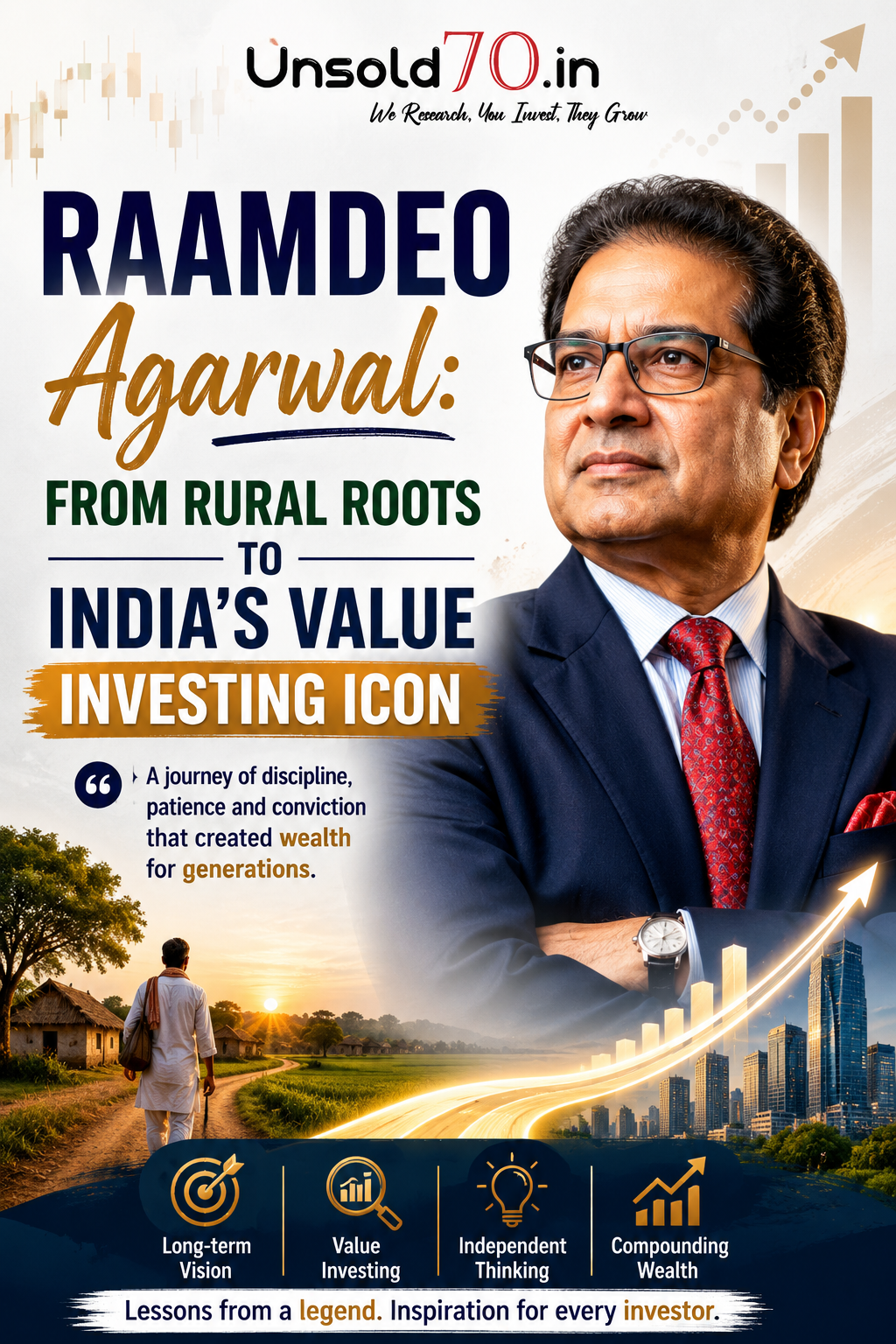
Raamdeo Agarwal’s story started in a small farming family in Chhattisgarh, where the ups and downs were not the stock market but rather the monsoons. All those early years had instilled in him a sense of discipline, deferred gratification, and resource allocation before he got to balance sheets. Each harvest was another reminder of an old adage in the financial world: Real wealth is the product of a patient investment, not a quick grab. His childhood in the country informed his choices of investments later on, without him even being aware of it.
Undeterred, Agarwal went ahead and studied Chartered Accountancy, learning the business language of financial statements, with the same resolve as building a new life for himself as a farmer. The qualification transformed numbers from abstract calculations into narratives of business quality. It also provided the analytical discipline that would later separate him from the emotional currents dominating India’s stock market.
How They Entered the Stock Market
After earning his accounting certification, Agarwal settled in Mumbai, India’s bustling financial hub, where the stock exchange felt like a chaotic marketplace fueled more by gossip than analysis. Back when digital tools hadn’t yet reshaped access to markets, pit-based trading favored quick moves and gut feelings instead of careful thought. To someone chasing logic, it became mentally draining, weighed down by clunky processes and endless emotional pressure.
He didn’t chase guesses. Instead, he poked holes in their logic. With Motilal Oswal, the company took shape—not through luck, but intent—to make research the core of everything they did. Investing? Not a game. More like careful placement of money. His own path ran parallel—early days hunting swings on charts gave way to deep dives into how companies actually work.
- One season of investing looked different from the next as time moved on.
- Old-school trading: crowded exchange floors, delayed information, rumor-driven decisions, emotional buying and selling.
- Long-term compounding: business analysis, structured research, patience, and wealth created through sustained ownership of exceptional companies.
Biggest Investments
What made Agarwal stand out was his knack for spotting companies built to grow value slowly and steadily. Confidence showed in every pick—firms with moats others couldn’t cross, structures that stretched further each year. Year after year, strength mattered more than trends and real growth louder than hype. Picking them wasn’t luck—it came from watching how quietly some businesses just kept earning.
Patience, again and again, shaped his biggest wins in investing. Rather than chasing quick shifts in stock prices, he trusted solid businesses to build worth by doing things right every day. Time proved stronger than guesses—this showed up clearly across his holdings. What stayed steady mattered more than what moved fast.
Failures and Lessons
What shaped Agarwal weren’t just wins but stumbles along the way. Mistakes made early on, fueled by guesswork, showed how feelings can hijack logic in seconds. Losing money didn’t crush him—instead, it instructed. Each loss shifted focus: safety of funds started outweighing the thrill of bold moves.
Now he sees risk differently, shaped by what happened. When you know how a company really works, ups and downs feel under control—otherwise, tiny shifts stir panic. It was the errors that drove it home: success comes not from guessing next week but grasping long stretches of time.
Investment Philosophy
What drives Agarwal’s thinking? The QGLP model: Quality, Growth, Longevity, Price. Not about scanning cold metrics alone. Instead, blend strong operations with lasting scale, staying power in rivalry, and fair pricing—all woven into a single way to decide.
That well-known idea—”Buy Right, Sit Tight”—isn’t just about waiting calmly. Behind it lies a deeper truth: big gains tend to go to those who spot strong companies fast yet stay hands-off afterwards. While others rush around trying to tweak every move, doing nothing can quietly work harder. When everyone else counts by movement, and you count by stillness, you are powerful.
The framework can be said as follows:
Quality:
Back firms that have a strong management team and a long-lasting competitive edge.
Scalability:
Look for firms that have the ability to maintain earnings growth over a long period of time.
Longevity:
Choose businesses that have flexible structures that can withstand the economic cycle.
Price:
Only buy when there is a good margin of safety in valuation.
Net Worth Growth Journey
Years passed before Agarwal’s net worth took shape, built not on bold gambles but steady growth. Slowly, his path mirrored how Motilal Oswal Financial Services grew—step by step. Insight shaped every move there, turning analysis into an edge few could match. As the firm’s credibility strengthened, so did the value of both its institutional franchise and his personal investments.
His growing net worth illustrates an important distinction between wealth creation and income generation. Income rewards effort in the present, while wealth rewards intelligent ownership across time. Agarwal consistently positioned himself on the ownership side of that equation.
Key Advice for Beginners
What stands out about Agarwal isn’t just returns—it’s how he lifts others through knowledge. Because markets shift constantly, his focus stays fixed on grasping what companies actually do. Staying calm when things swing wild? That counts way more than chasing whispers from the latest tip. While many scan for shortcuts, growth comes slowly—through study, time, and steady nerves. His guidance about the top 70 stock market companies remains remarkably practical:
- Study businesses before studying stock prices.
- Avoid speculative shortcuts disguised as investment opportunities.
- Allow compounding sufficient time to work.
- Learn from mistakes without abandoning disciplined processes.
- Treat investing as ownership of businesses, not ownership of ticker symbols.
Famous Quotes
Most of Raamdeo Agarwal’s well-known remarks stuck around simply because they turn tricky money ideas into clear rules. What helps them last isn’t clever wording—it’s how they strip things down. Take his famous line: “Buy Right, Sit Tight.” That one packs patience and precision into four words. Instead of chasing moves, it pushes you toward picking strong companies early. Then? Let years do the heavy lifting. Another key idea he pushed forward was the QGLP method—not flashy, yet powerful. Excitement doesn’t build fortunes; quiet consistency does. Big results often come from repeating smart steps, not hunting thrills. His influence grows quieter over time, yet somehow louder in practice.
Still today, these thoughts hold weight since life keeps posing the same deep questions. Financial markets constantly reward action while true compounding often rewards restraint. Agarwal’s career demonstrates that the greatest competitive advantage in investing is frequently not superior information but superior temperament, supported by disciplined research and unwavering patience.

Related Posts
Anil Kumar Goel Biography: Portfolio, Career & Investment Philosophy
Anil Kumar Goel: India's "Sugar Baron" and the Discipline of Deep-Value…
Nikhil Kamath: The Contrarian Who Rewired India’s Investment Landscape
Discover the inspiring journey of Nikhil Kamath, the co-founder of Zerodha,…

Nemish Shah: The Man Who Trusted Compounding
Nemish Shah is one of India's most respected value investors and…
Leave a Reply